

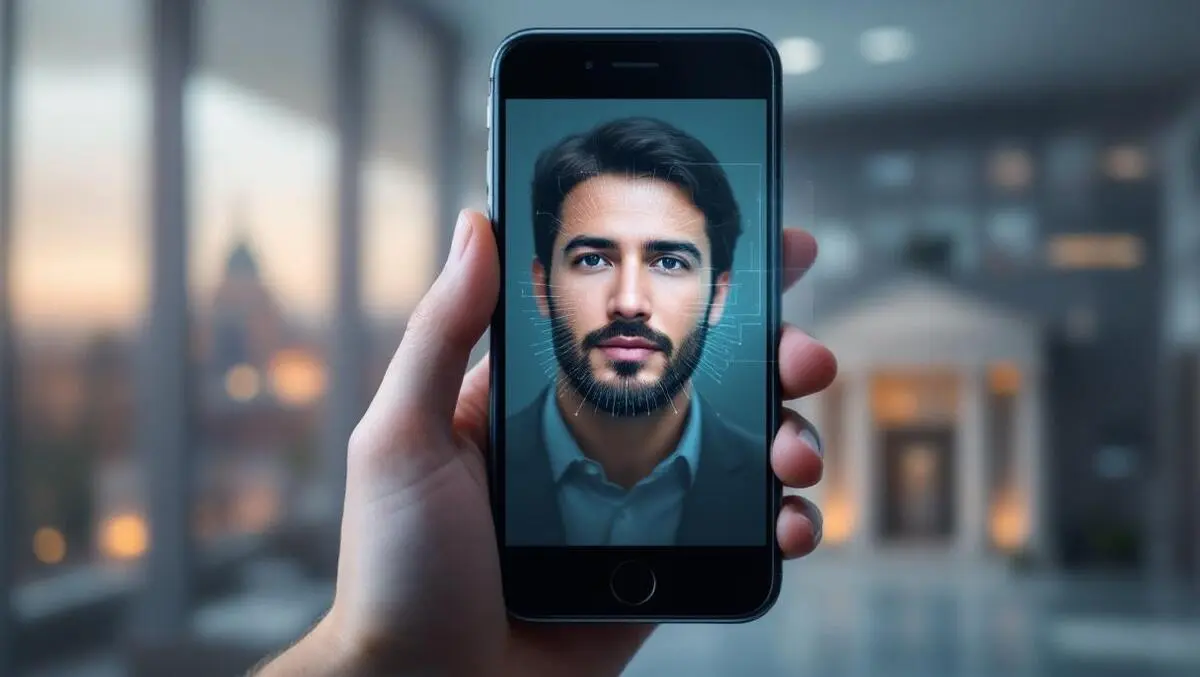
iProov handles 1m daily checks as deepfake fraud soars
Fri, 6th Mar 2026
iProov reports processing more than one million biometric identity verification transactions a day in 2025, as businesses and governments respond to a rise in deepfake-driven fraud and account takeover attempts.
The London-founded company sells facial biometric verification and liveness detection services and framed the milestone as evidence of a broader shift in how organisations manage access and onboarding. Remote work and digital customer journeys have reduced reliance on in-person checks, while attackers have increasingly targeted identity controls at the "front door" of online services.
Deepfakes have shifted from novelty to an operational tool for criminal groups. A Gartner study found that 62% of organisations experienced a deepfake attack in the past year and that attackers now prioritise "stealth and identity compromise" over other exploits.
Security teams increasingly treat authentication and onboarding systems as primary targets rather than routine compliance steps. Fraud that once relied on stolen passwords and basic document forgery now uses synthetic media and automation, increasing pressure on firms running digital channels at scale, including banks, payment providers, travel operators, and public sector agencies.
iProov says it sees the same pattern in its telemetry and research. The company operates a Security Operations Centre, branded iSOC, which monitors attack methods aimed at biometric checks and remote identity processes.
Fraud research
In its Threat Intelligence Report 2025, iProov reported a 2,665% rise in native virtual camera attacks and a 300% increase in face-swap attempts year on year. Virtual camera attacks can let criminals feed manipulated or pre-recorded video into verification flows. Face-swap techniques can place one person's likeness onto another's image stream.
iProov also highlighted work linked to MITRE ATLAS, which catalogues adversarial tactics involving artificial intelligence. It said it disclosed a vulnerability in know-your-customer processes, along with mitigations aimed at automated onboarding attacks.
Separate consumer research, described as independent and based on 2,000 people, found that only 0.1% could accurately identify deepfake media. The finding underscores the limits of manual review and customer judgement when synthetic video and images look realistic.
iProov also said it identified a threat group it calls "Grey Nickel", which it described as using coordinated synthetic-identity attacks against banking and payments platforms. It also reported an iOS-focused discovery in which a tool could intercept video streams at the operating system level and bypass standard liveness checks.
Testing claims
Growth in deepfake tooling has increased scrutiny of biometric vendors and the testing methods they use. The market includes a wide range of liveness checks and presentation-attack detection approaches, and many suppliers publish results based on internal testing or limited third-party work.
iProov pointed to what it described as independent validation aligned with NIST 800-63-4 digital identity guidelines. It said it was the first biometric vendor independently validated for deepfake resilience against CEN TS 18099 Level 2 (High) and Ingenium Biometrics Level 4 testing for protection against deepfakes and forged media, with testing conducted by an ISO 17025-accredited laboratory.
It also said it was certified in late 2025 against the UK Government's Digital Identity and Attributes Trust Framework Gamma (0.4) standard, overseen by the Office for Digital Identities and Attributes.
Customers and deployments
iProov cited deployments across border processing, financial services, and property transactions. In travel, it has worked with U.S. Customs and Border Protection on Enhanced Passenger Processing at Aruba Airport and Orlando International Airport. It also participated as one of four suppliers in UK Home Office trials, conducted in a research and development environment focused on maritime ports.
In financial services, the company said it secured millions of users for MoMo in Vietnam and UnionDigital Bank in the Philippines, and supported account recovery for Raiffeisen Bank.
In the UK property market, Thirdfort uses iProov's services, according to the company. iProov presented the deployment as a response to "the £1.6 billion in property fraud risk", with biometric checks used for high-value legal transactions.
Product direction
iProov has also pushed further into workforce security, where phishing, session hijacking, and social engineering can lead to employee impersonation. It said it launched facial biometric multi-factor authentication for enterprise workforces.
The company also announced general availability of biometrics for Enhanced Passenger Processing, which uses on-the-move capture rather than fixed kiosks. It positioned the approach as relevant for airport operations and identity checks tied to traveller arrivals.
In December 2025, iProov was selected by Microsoft for the Agentic Launchpad programme, in collaboration with Nvidia and WeTransact, as one of 13 software companies. The programme focuses on AI development across the UK and Ireland.
Founder and CEO Andrew Bud linked the company's growth to changes in the threat environment.
"As deepfakes and AI agents transform the enterprise attack surface, identity becomes the foundation of digital trust," said Andrew Bud, founder and CEO of iProov. "With well over one million daily verifications, iProov delivers genuine human presence assurance so organisations can secure customer and workforce identities by anchoring every critical digital interaction to a real, verified human-transforming authentication into a live defence for the AI era."