

Zscaler expands Project AI-Guardian with tech partners
Thu, 11th Jun 2026
Zscaler has expanded Project AI-Guardian to include a group of technology alliance partners, adding cloud, infrastructure, software and identity companies to an initiative that previously centred on global systems integrators.
The expanded roster includes AWS, CoreWeave, Databricks, Deep Cogito, Equinix, Glean, Google Cloud, OpenAI and Saviynt, along with Coforge and NTT DATA. They join existing systems integration partners Cognizant, EY, HCLTech, Infosys, TCS and Wipro in a broader effort to secure enterprise use of artificial intelligence.
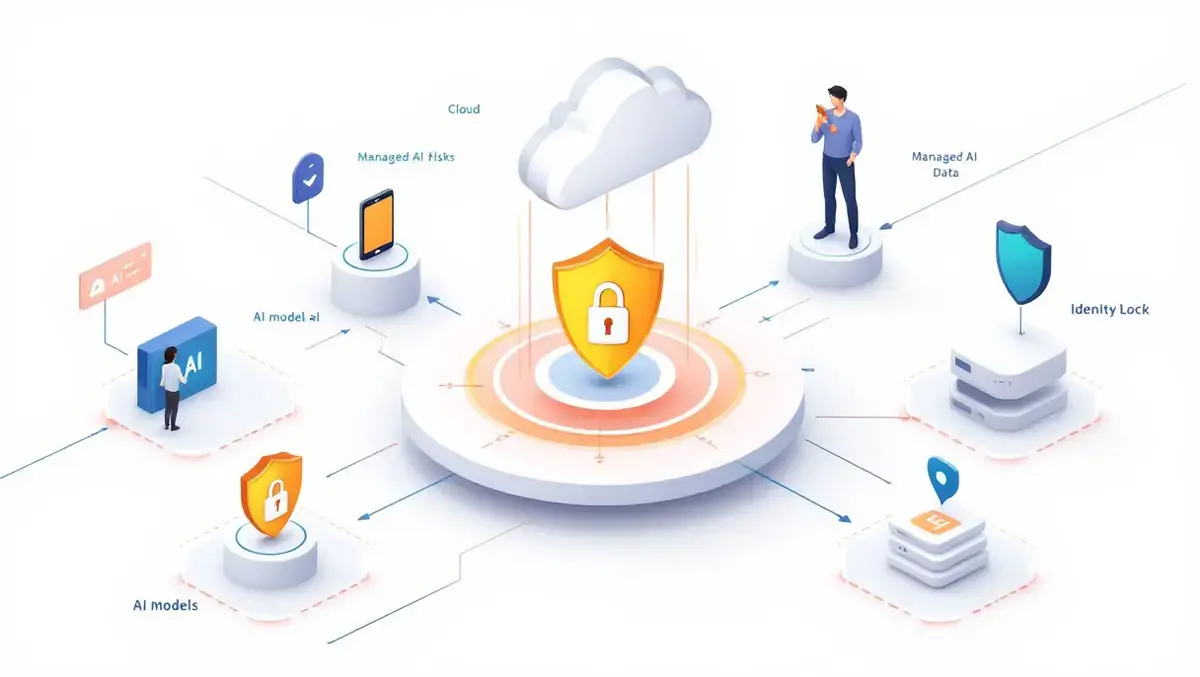
The expanded programme is designed to connect Zscaler's Zero Trust Exchange platform and AI Protect products with partner technologies so security and governance signals can be shared across AI-related activity. The model is intended to cover interactions involving identities, applications, agents and data across AI services.
Zscaler is positioning the initiative around the view that businesses are assembling multiple AI tools and infrastructure layers from different suppliers, while security teams often lack a unified way to monitor and control risk across those systems. In response, its platform will work with partners on visibility, policy enforcement and data protection tied to AI use.
Among the services Zscaler highlighted are an AI Access Graph that maps links between users, applications, agents and data, and risk modelling designed to identify AI-related exposure. Partner products can both contribute information to those systems and act on the resulting signals.
Partner network
The latest phase broadens the initiative beyond consulting and implementation partners into a wider technology ecosystem. That reflects how enterprise AI deployments increasingly span cloud infrastructure, model providers, software platforms, identity controls and managed services rather than a single stack.
Dhawal Sharma, Executive Vice President, AI Security and Strategic Initiatives at Zscaler, outlined the company's view of the market.
"AI is creating enormous opportunities for organizations, but it is also reshaping the threat across the security and governance landscape," said Sharma.
"Securing AI is an ecosystem effort. With the expansion of Project AI-Guardian through our technology alliance partners, Zscaler is helping customers extend zero trust across enterprise AI interactions so they can adopt AI faster while maintaining the visibility, control, and data protection they need to innovate securely."
The joint work will focus on policy controls for AI workflows, protection against the leakage of sensitive data through prompts and training inputs, and broader oversight of AI assets such as unauthorised applications, application programming interfaces and cloud-hosted systems.
Industry response
Several partners framed the collaboration around the challenge of securing AI systems as they move from trials into production. Their comments pointed to a common concern that AI risk extends beyond models and applications into infrastructure, identities and business data.
CoreWeave linked the issue to the underlying computing layer used to run AI workloads.
"As enterprises move AI into production, the attack surface expands at the infrastructure level, beyond just the application layer," said Jim Higgins, Chief Information Security Officer at CoreWeave.
"CoreWeave's security is built from the silicon up, and working with Zscaler through Project AI-Guardian means customers will be able to enforce zero trust access controls at every layer of their AI stack, from compute to agent interaction."
Databricks emphasised customer demand to connect security telemetry from different vendors into existing data environments.
"Customers consistently tell us they want to route their security data to their Databricks environment and extend their existing security vendor protections to our platform. Our partnership with Zscaler delivers on both fronts. By ingesting Zscaler logs into Databricks and collaborating on Project AI-Guardian, we are helping joint customers safely accelerate their AI initiatives without creating new security silos," said Stephen Orban, Senior Vice President, Product Partnerships & Ecosystem.
OpenAI described the alliance as part of a broader push to place controls and oversight around the use of AI in security operations.
"As AI becomes an increasingly important tool for cybersecurity, organizations need systems that are not only capable, but secure, reliable, and aligned with the realities of enterprise risk management. Through our partnership with Zscaler and initiatives like Trusted Access for Cyber and Project AI-Guardian, we're advancing a shared commitment to deploying AI responsibly-combining frontier capabilities with rigorous safeguards, transparency, and human oversight. Together, we're helping security teams strengthen their defenses while building confidence in the safe adoption of AI across the enterprise," said Scott Rosecrans, Vice President, Strategic Pursuits at OpenAI.
Saviynt focused on the role of identity in controlling AI systems and access.
"AI security is an identity problem first. Zscaler stops threats in motion; Saviynt governs the identities behind them. Together, we give enterprises the control plane they need to adopt AI without losing visibility or governance," said Vibhuti Sinha, Chief Product Officer at Saviynt.
Zscaler said the integrations are intended to reduce the burden on customers of linking separate security and AI tools themselves, while giving partners a way to connect their products more directly into enterprise AI environments. The expanded list of partners underlines how vendors across cloud, cybersecurity and data platforms are positioning themselves around the governance demands created by wider corporate use of generative AI and autonomous software agents.