

Organisations urged to boost data resilience as AI adoption rises
Thu, 10th Jul 2025
Industry experts have emphasised the importance of data resilience as organisations accelerate their use of artificial intelligence (AI) across increasingly complex digital environments.
The growing implementation of AI technologies has introduced new challenges in data architecture, prompting concerns about whether data security measures are keeping pace with rapid innovation.
Adapting data protection for AI
Ben Young, Field CTO APJ at Veeam, highlighted the transformative effect of AI on business data systems, stating that these changes demand urgent attention to backup processes and security protocols.
On AI Appreciation Day, it is worth pausing to consider not just what AI can do but also the challenges it creates. AI is fundamentally reshaping enterprise data architecture, introducing new and often distributed compute environments, training datasets, and workflows that did not exist even two years ago. But in the rush to innovate, many businesses are forgetting to ask two critical questions:
Young elaborated further, asking, "Is any of this backed up? Are the backups protected and secure?"
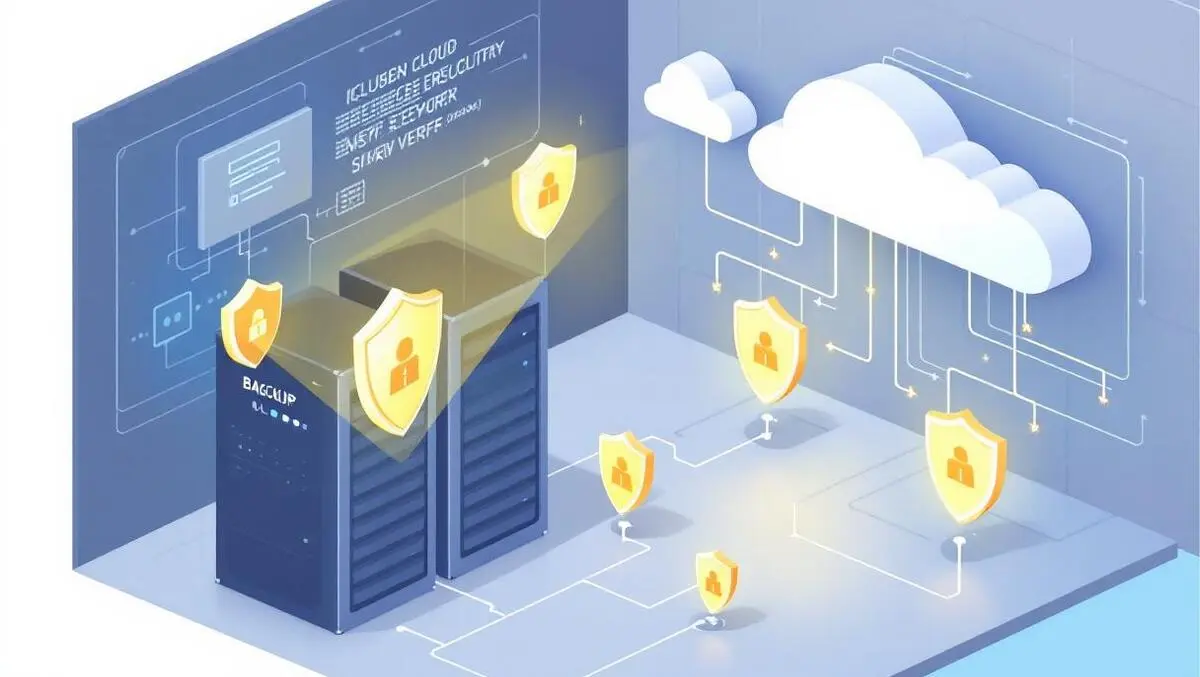
Young referred to the findings of Veeam's 2025 Ransomware Trends and Proactive Strategies Report, which revealed that nine out of ten organisations globally had their backup repositories targeted by threat actors in the past year. He stated this points to a clear need for backups that are both secure and immutable.
"This means data not only needs to be backed up; those backups need to be secure and immutable to ensure full protection," he said.
Young also observed that many organisations are moving AI training workloads to the public cloud without proportionate data protection strategies.
He cautioned that a reliance on as-a-service infrastructure could create a false sense of security against increasingly sophisticated threats.
"At Veeam, we see organisations deploying AI training workloads in the public cloud, sometimes for the first time, without mature data protection strategies in place."
"There is an assumption that as-a-service infrastructure is inherently secure, but in reality, protecting AI requires consideration of an increasingly complex data environment. That means safeguarding model outputs, ensuring rapid restore capabilities, and maintaining visibility into where data is stored, especially as markets in APJ develop strict data sovereignty regulations," Young added.
"AI may be intelligent, but resilience still requires human foresight. Innovation without protection is a risk no enterprise can afford to take."
AI as a resilience enabler
David Allott, Field CISO APJ at Veeam, presented a complementary perspective, suggesting that recent debates tend to focus heavily on AI's threats while overlooking how AI can advance data resilience and cyber protection.
On AI Appreciation Day, most conversations focus on the risks AI introduces. But in cybersecurity, we are overlooking a bigger opportunity: AI is also helping us rethink how we defend and recover.
Allott described how AI is changing the way organisations manage data security, helping businesses move from reactive defence to more proactive approaches.
He said, "AI is enabling security leaders across APJ move from reactive defence to proactive resilience. At Veeam, we are integrating AI to help businesses better understand and protect their data. It is not just about knowing where it is stored, but understanding what it contains, who has access, and whether it is subject to compliance issues or exfiltration risk."
He addressed the visibility challenges faced by companies operating hybrid-cloud and mixed infrastructure systems, and outlined AI's role in resolving these complexities.
"As companies adopt hybrid-cloud models and operate across legacy and modern infrastructure, this visibility becomes harder to achieve. AI cuts through the complexity by identifying anomalies faster, identifying misconfigurations before they become vulnerabilities, and aligning backup strategies with actual data value."
Allott cautioned that while AI is not a solution to all security issues, it provides significant context and operational insight.
"While AI is not a silver bullet for security, it is a tool that delivers clarity and context on how to be more resilient. For example, Veeam enables AI directly into platforms to assist with threat diagnostics and intelligent support for backup admins. Tools like VeeamONE deliver AI-powered threat detection, while Recon Scanner (a feature of Veeam Data Platform) helps identify risks before they escalate. This ensures organisations can protect the right data in the right way before threats emerge."
Industry observers point out that as enterprises in the Asia-Pacific and Japan region continue to integrate AI technologies, the focus on robust backup, security, and compliance strategies will only grow in significance.