

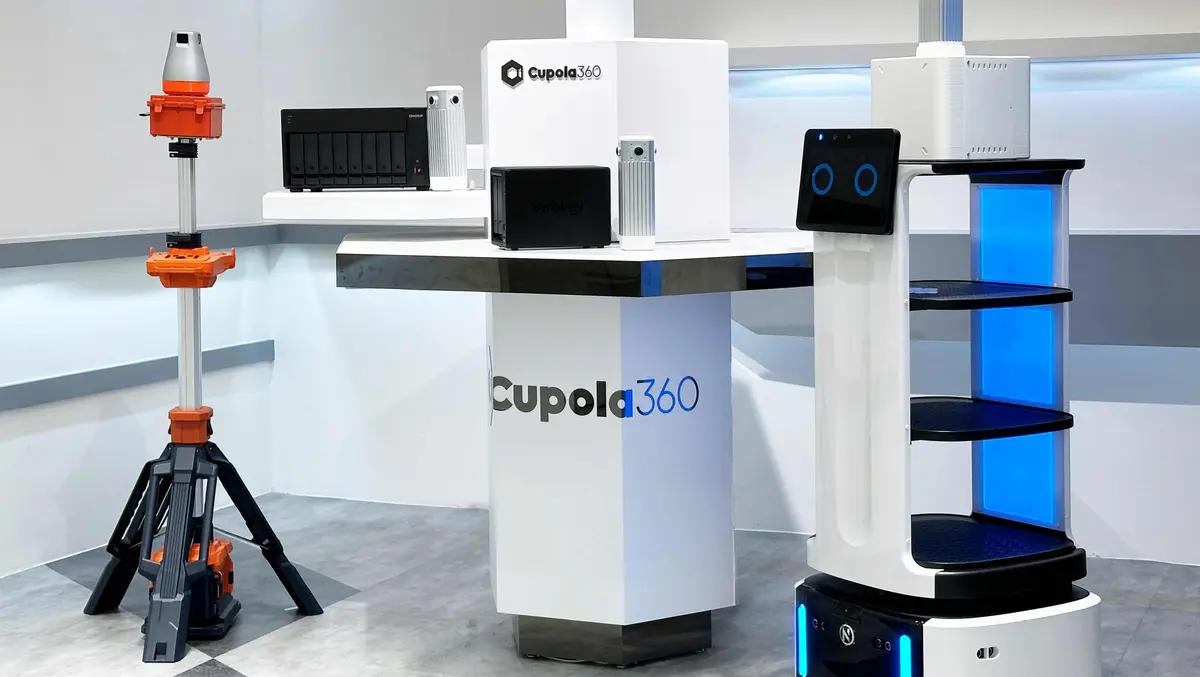

Cupola360 has introduced its Omni Speed Dome camera and expanded its Reality Remote Management product range, broadening its remote monitoring offer for industrial and high-value sites.
The Omni Speed Dome is designed to provide 360-degree panoramic monitoring without mechanical rotation. It uses image-stitching technology to eliminate the blind spots and delays associated with conventional speed dome cameras.
This allows operators to maintain a continuous view of an area while digitally locking on to, zooming in on and tracking multiple targets on a single screen. Removing moving parts also addresses the wear and durability issues common in mechanical camera systems.
The camera complies with ONVIF protocols, allowing it to work with existing video management systems and network video recorders. This gives customers with older surveillance infrastructure a way to add the device without replacing broader systems.
Mobile patrol
Cupola360 also outlined how its 360-degree panoramic camera modules are being used in autonomous patrol equipment, including patrol robots and robotic dogs. The vision modules give these platforms a full surrounding view to support movement, obstacle avoidance, remote operation and AI-based analysis.
The approach is aimed at patrol work, warehouse inspection and other higher-risk tasks where remote monitoring can reduce the need for labour-intensive site rounds. The system can also issue instant anomaly alerts.
One deployment is already operating at a tier-one data centre in Taiwan, where it is used to manage operational personnel access and support remote site visits for guests.
Integrated platform
A central part of the product range is the Cupola360+ hardware and software patrol platform. It combines panoramic video, IoT control, mobile patrol tools and AI applications in a single system for remote field management.
The setup is intended to create a digital twin-style operating environment, with panoramic vision providing visual coverage, IoT controls handling remote actions and AI tools analysing activity. The platform also includes on-screen data overlays and integration tools for third-party systems.
Among the edge AI functions Cupola360 highlighted are electronic fence intrusion alerts, personal protective equipment recognition and people counting. These are intended to shift patrol work from post-incident review to real-time issue detection.
Data centre focus
Another part of the rollout is a set of modular bundles designed for faster deployment in different operating environments. One package is tailored for AI data centre operations, where administrators need to track access, monitor equipment status and follow maintenance activity without disrupting the site.
The bundle enables remote oversight of personnel entry and exit, server rack conditions and server indicator lights. It is also intended to help managers monitor workflows such as server additions, replacements and relocations, while keeping a record of task progress.
This reflects a broader push by technology suppliers to address operational pressures in facilities that are costly to staff and difficult to monitor continuously in person. Data centres, factories, transport hubs and logistics sites are increasingly adopting combinations of cameras, software and automation to improve visibility across dispersed locations.
Incident review
Cupola360 also outlined a product called Panoramic Time Capsule, integrated with network attached storage. The system uses a built-in network video recorder to capture event activity and lets users change perspectives during playback without lag.
This can help reconstruct incidents more fully and reduce the time spent tracing events across multiple video feeds. That could be relevant in environments where operators need a clearer record for investigations and accountability.
The broader range shows Cupola360 moving beyond camera hardware into a more complete remote management offering that combines surveillance, AI analysis and IoT-based control. Its target sectors include large factories, data centres, airport transit systems, parking facilities, warehouses and convenience store chains.
"Wherever remote management is possible, a potential market exists," said Cupola360.